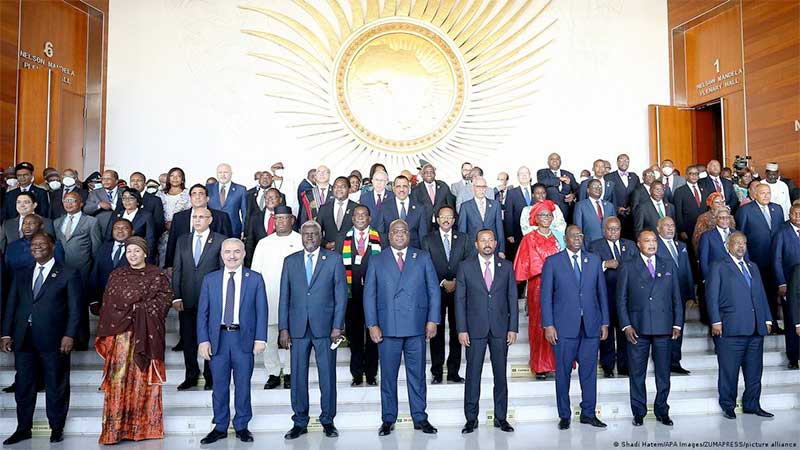

At the recent Ordinary Summit of the Heads of State and Government of the African Union, in Addis Ababa, consensually considered to have taken place in an international context of uncertainties, sustained by geopolitical conflicts, fragmented economic governance, with unpredictable consequences for Africa, namely, the increase in the loss of boosting global economic growth and rising inflation rates, the pan-Africanist concept was in vogue, whether you like it or not.
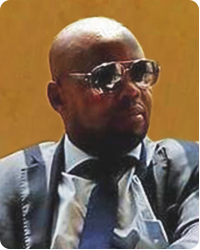
Paulo de Jesus*
The newly elected President of the governing body of the African Union, the President of Comoros, Azali Assoumani, concluded that it is imperative that Member States decide, with determination, their economic and development options.
As a lifeline, Assoumani pointed to the path of activating mechanisms of internal resilience, intra-African solidarity, rapid implementation of African financial institutions, “supported by virtuous governance”, in what Moussa Faki Mahamat, the current President of the Union Commission Africana, defends: The need for Pan-Africanism among Member States, avoiding the paradigm in which we see, idly by, the neighbor’s house burning, contrary “to our culture and even less to our civilization, both based on mutual aid ”.
It exemplified the shock of realities given today by countries confronted with terrorism, which fight, often alone, in the face of general indifference. “Where is our Pan-Africanism? Where is our solidarity? Where is our brotherhood?”, questioned the President of the African Union Commission, who also asked for the determined acceleration of the economic integration project, operationalizing the Free Trade Area, the theme chosen by the AU for the year 2023, as well as the emphasis to the principle of the African solution of African problems, "in a spirit of solidarity with one another in times of crisis".
In my opinion, the theoretical and practical reformulation of Pan-Africanism is unnecessary now, because the foundational bases and its traditional matrix, even though reinventable and changeable, remain valid. Just paint them, but in the same African colors. And we answer a small catalog of questions like these: What is it like to be a Pan-Africanist today? Or: What is it like not to be a Pan-Africanist in a competitive world where huge challenges remain for Africa? In an international context full of challenges for the cradle continent, this theoretical concept that defends the union of all African peoples as a way to enhance their voice (and their strength), which became popular in the struggles for independence from colonial yoke even the emergence of the then Organization of African Unity, now the AU, must be revisited.
Before, Pan-Africanism proposed political, social and cultural unity. Today, the essentials have not changed much, keeping these objectives alive and necessary. But there is a need for urgency and scope in the chapters of economic development and financial capacity among Member States, which quickly want to become freer and more independent in relation to Western “bloodsuckers”.
And the Free Trade Area on the African Continent (AfCFTA) project is an example of this pan-Africanist challenge.
As the secretary general of the initiative, Wamkele Mene, attests, “the AfCFTA is an instrument to be used by the African Union to position Africa to adequately respond to the challenges faced by our continent, the public health crisis from which the continent is emerging and, of course, the food insecurity crisis that is attributable to the current geopolitical context”.
It advances that accelerating the implementation of the AfCFTA will not only be in the context of completing the establishment of the legal construction, it will also be in accelerating commercially significant access to new markets across the AfCFTA market.
Objectively, the challenge is launched!
* Paulo de Jesus, lawyer, journalist, football agent registered with FIFA and consultant in international business related to Africa. He is a doctoral student in Public Administration and has a Master's in Public Policy Management; Bachelor of Law and Political Science/International Relations. Among other specializations, he also holds a post-graduate degree in Public Procurement and Sports Law.