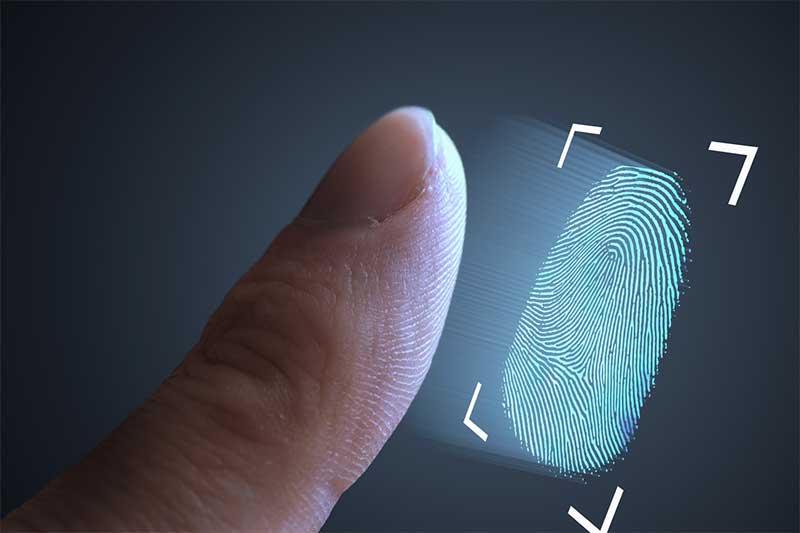

In the midst of criticisms about the credibility of the vote, political scientist Abiodun Fatai postulates that the Biometric Voter Accreditation System (BVAS) has, to a large extent, contributed to increasing the credibility of the Presidential and National Assembly elections of February 25 in Nigeria .
In an interview with “The Conversation”, Fatai notes that the failure of the electoral management body (INEC) to transmit the results in real time, as promised before the polls, was a matter of operational lapse.
Unlike previous elections, such as 2007, where voter turnout in some states was much higher than the number of people actually registered, Fatai says that was not the case this year, as the BVAS considerably eliminated multiple voter registration. and ensured that only those who passed the biometric verification test at polling stations were allowed to vote.
“The biometric technology really worked. He deleted several voter registrations. If your biometrics are not captured, you can no longer vote. These are improvements. Most importantly, the purpose of the technology was to improve the quality and integrity of elections and to reduce voter fraud. That was achieved,” says Fatai.
He said that most of the failures observed in the elections were operational failures that have little or nothing to do with the technology employed by INEC.
Expanding on that point, it says that the technology is operated by humans and some of the failures were a result of INEC's lack of ability to deploy the technology at an optimal level.
On what Nigeria should do to improve the digitalization of its future elections, Fatai says INEC must not only strictly follow the provisions of the law, but also ensure that people are properly trained to use available technology.
He adds that Nigeria must also upgrade its broadband network to improve connectivity, gain more technical expertise and, above all, increase political will for a fully digital electoral experience.
However, the Conference of Political Parties of Nigeria (CNPP) urged the courts to do justice to Nigerians after INEC failed to use BVAS technology as it said it would.
According to the CNPP, the electoral referee promised before the polls to transmit the results to the portal using the BVAS devices in polling stations where there was no internet connection, as long as the BVAS machines were connected to the internet.
Abiodun Fatai, PhD from the University of KwaZulu Natal, South Africa, works in the Department of Political Science at the University of Lagos and his research interests include election technology, comparative politics, development studies and democratization.